EVIDENCE FOR OLDER-THAN-CLOVIS AT THE GAULT SITE, TEXAS By Mike Collins
Defining Older-than-Clovis at the Gault Site through the Statistical
Analysis of the Lithic Debitage Mean Averages of Flake Measurements by
Jennifer Gandy
Geologic Context of the Older-than-Clovis Archaeological Material in
Area 15 at the Gault Site by Anastasia Gilmer and Charles Frederick
Site Formation Processes at Gault by Bryan Heisinger & Anastasia Gilmer
Microwear Analysis of Clovis and Older Than Clovis Artifacts from the Gault Site by Marilyn Shobergy
Lithic Technological Trends of the Older-Than-Clovis Components at the
Gault Site, Bell County, Texas (41BL323) by Nancy Velchoff, Tom
Williams, Robert Lassen and Jennifer Gandy
3-D plot of Clovis (green) and Olderthan- Clovis (red) artifacts, bedrock (gray), and
large limestone rocks (blue) in the lower 2 meters of excavated Area 15 (view is looking
south). Clovis artifacts are a point, blades, diagnostic debitage, bifaces, core, and unifaces.
Older-than-Clovis component artifacts lacking established age assignments consist of
potentially time-diagnostic blade cores, blades, tools on blades, bifaces, flake cores, and tools
on flakes. The anomalous pile of large, irregular limestone rocks measures 108 cm EW,
79cm N-S and 51cm high, consists of clasts up to 35 cm across and 15 cm thick and lacking
in stream rounding, partly supported by soft sediment, and neither clearly natural nor
human-made. A few non-diagnostic flakes were present throughout. Stratigraphically, it
extends downward from the base of the Clovis component through most of the underlying
deposits.
Thursday, March 13, 2014
Bluefish Caves and Old Crow Basin: A New Rapport
Jacques Cinq-Mars and Richard E. Morlan
Archaeological Survey of Canada
Canadian Museum of Civilization
Ice Age Peoples of North America.
Environments, Origins, and Adaptations of the First Americans, edited by Robson Bonnichsen
and Karen L. Turnmire, pp. 200-212. Corvallis: Oregon State University Press for the Center
for the Study of the First Americans.
Introduction
A cold, arid region known as Beringia played an unusually important role in the peopling of
the Americas. Stretching from eastern Siberia across Alaska to the Yukon Territory of Canada,
Beringia represented the gateway to the New World. During glacial advances, this region
served as a refugium for plants and animals, and evidence indicates that it was always available
as a rich habitat for human societies adapted to survive and prosper there. Beringia has played
a pivotal role in the evolution and dispersal of many organisms, and it is not surprising that it has
been the subject of special study by scientists in many disciplines and nations (e.g., Hopkins, et
al. 1982; Kontrimavichus 1984). Yet in many respects, Beringia remains little known and poorly
understood, and the archaeology of the region is one aspect that is still in its infancy.
This paper presents some of the principal conclusions of Pleistocene archaeological research
in the northeastern corner of Beringia -- the northern Yukon interior. This is an extensive area of
plateaus, uplands and ranges bordering several large lowland basins (Hughes 1972; Hughes, et
al. 1981). During the last two decades, the authors of this paper have conducted research in the
Yukon. One has focused his attention primarily on the uplands (Cinq-Mars 1978, 1990), while
the other has concentrated on the lowlands (Morlan 1980, 1984, 1986). At the present time,
neither of these areas provides a complete picture of late Pleistocene developments, but a
provisional outline can be glimpsed by integrating results of studies in both settings.
The paper begins with a consideration of paleoecological and archaeological findings at an
upland site known as the Bluefish Caves. The record at this site spans approximately 25,000 years, including a lengthy period during which the lowlands record appears to be
muted by events marking the final stages of a late Wisconsinan glaciolacustrine inundation.
More importantly, the archaeological evidence at the Bluefish Caves has been derived from
a primary depositional context that provides a degree of chronostratigraphic and taphonomic
control not yet available in the lowland region. The Bluefish Caves evidence enables us to demonstrate human occupation in eastern Beringia during the height and decline of the last glaciation. The implications of that evidence form a basis for reconsidering older
materials from the lowlands for which fewer controls are available. In this process of
reevaluating the evidence from both the uplands and the lowlands, we are aided by new data from accelerator mass spectrometry (AMS) measurements on bone collagen.
"...Based on the distribution of tundra plants around the Bering Strait region..."
Really? That's it?
"...Genetic evidence suggests that most Native Americans are descended
from a population that was isolated somewhere between northeast Asia and
Alaska during the LGM..."
Absolutely no evidence to support this claim. Much evidence to the contrary.
"...The analysis of ancient DNA from human skeletal remains dating to
24,000 cal BP from Mal’ta in southern Siberia appears to confirm the
pre-LGM divergence of Native Americans from their Asian parent
haplogroups..."
1. Mal'ta is southern Siberia, not between northeast Asia and Alaska.
2. "...The MA-1 mitochondrial genome belongs to haplogroup U, which has also been found at
high frequency among Upper Palaeolithic and Mesolithic European hunter-gatherers, and the Y
chromosome of MA-1 is basal to modern-day western Eurasians and near the root of most
Native American lineages. Similarly, we find autosomal evidence that
MA-1 is basal to modern-day western Eurasians and genetically closely
related to modern-day Native Americans, with no close affinity to east
Asians..."
M. Raghavan et al., Nature 505, 87 (2014).
3. MA-1 was clearly part of a Gravettian culture, which most scholars agree
originated in southwestern Europe/ Iberia. This is concordant with MA-1's
genetic signature.
"...At the same time, dated archaeological and human remains indicate
that settlement of the Western Hemisphere probably took place after the
LGM..."
I disagree:
"...At Meadowcroft Rockshelter, artifacts occur in sediments that may be as old as 22 to 18 ka..."
"...Cactus Hill...Three 14C dates ranging from 20 to 18 ka are reported
from the levels below Clovis...luminescence dates on the aeolian sands
correlate with the older 14C results and indicate minimal mixing of the
sediments...biface and blade assemblage stratigraphically below the
site’s Clovis assemblage is compelling..."
"...La Sena and Lovewell sites that date from 22 to 19 ka...many of the
leg bones display percussion impact and flaking, which suggests that
they were quarried and flaked by humans while they were in a fresh,
green state, within a few years of the death of the animals..."
T. Goebel et al., Science 319, 1497 (2008).
"...Previous radiocarbon dating had obtained only lower limits of 40–45 ka BP for the Pedra
Furada basal layer. Nine charcoal samples from well-structured hearths were subjected to
the ABOX-SC procedure and their radiocarbon content determined by accelerator mass
spectrometry. Measurements on five of the samples returned ages of greater than 56 ka BP,
from graphites produced from ABOX pre-treated charcoal combusted at 910 C. Two other
samples were greater than 50 ka BP. The remaining two samples were essentially completely
combusted at 650C, with no material surviving to make a 910 C CO2 fraction. Their ages
were 41.3 and 47.2 ka BP. Ages obtained from graphites generated from the 650C combusted
fraction are considered minimum ages..."
A revised chronology of the lowest occupation layer of Pedra Furada Rock
Shelter, Piaui, Brazil: The Pleistocene peopling of the Americas.
Santos et al. (2003)
I could go on citing...
"...The shrub tundra zone in central Beringia represents the most
plausible home for the isolated standstill population. Although
high-latitude archaeological sites of LGM age are unknown, postglacial
submergence of the Bering land bridge would explain the absence of
traces of people concentrated in central Beringia...."
"...To confirm the hypothesis, archaeological sites of LGM age must be documented in Beringia..."
A major excavation initiative is about to get underway in Vero Beach, Florida at the famed Old Vero Man site, with scientists from Mercyhurst Archaeological Institute (MAI) at Mercyhurst University in Erie, Pa., and the Old Vero Ice Age Sites Committee (OVIASC) collaborating to unearth what they believe will be a significant archaeological find. The site, which is named after the discovery ofVero Manin 1915 — the remains of whom arebelieved to be at least 13,000 years old— is believed to be the resting place for a bevy of significant fossils and artifacts, including additional human remains as well as the remains of extinct animals. The project will be headed by MAI director and principal excavatorJames Adovasio, Ph.D. Adovasio and MAI research archaeologistC. Andrew Hemmings, Ph.D., with Mercyhurst alumni Anne Marjenin, director of the Archaeology Processing Lab at Mercyhurst serving as chief field assistant; and Ben Wells, a graduate student at the University of West Florida, assisting as well, along with several other Mercyhurst archaeology students. The Old Vero Man site has been on archaeologists’ radar for more than a century, when the site was discovered as a result of workers who uncovered it while digging the main drainage canal in Vero Beach. At the time, evidence of extinct animals such as mastodons, saber tooth cats, ground sloths, mammoths and other fossils were discovered, along with the now-famous human remains of Old Vero Man,which includedskull fragments and 44 bones of a human skeleton. Of course, Old Vero Man and the archaeological site associated with his discovery have not been without controversy. The discovery itself has long been regarded as controversial and inconclusive, since the age of the human remains were found to be newer than the extinct animal bones, likely the product of shifting geological layers. Because of this, while the Vero site is still regarded as one of the most significant archeological finds in North America concerning early American inhabitants, questions about the site still remain largely unanswered. Dr. Adovasio explained in a recent press release that, ”From the beginning, Vero was one of the more infamous archaeological sites in North America because it was seen as such a threat to the then perceived wisdom that no humans had lived here during the last Ice Age,” adding that,“Like Meadowcroft and Monte Verde, it was the subject of vitriolic abuse by the alleged experts at the time.Largely because of that abuse and the less than rigorous field methods, Vero went off the radar. But, because of the phenomenal preservation of Ice Age plant and animal materials at that site, this new excavation will serve to illuminate a time frame in the American Southeast that no other site can, with or without human associations. Whatever information is in there, we are going to get it.” Adovasio and Hemmings mission in the new dig is to finally bring about a conclusion to the authenticity of the site, and seek to piece it into other insights into early humans on the North American continent. For his part, Adovasio has been at the center of other significant fact-finding archaeological digs such as this one. He was instrumental in managing the meticulous excavation of the Meadowcroft Rockshelter, which is now “widely recognized as the earliest well-dated archaeological site in North America, with evidence of human habitation dating to ca. 16,000 years ago.” Dr. Hemmings, who an expert on the oldest Paleoindian sites in the U.S., received his master’s and doctoral degrees from the University of Florida, and has extensive field experience in successfully working on ancient and submerged sites throughout Florida. In addition to their proven expertise, both researchers will also bring to bear the latest methods used in modern scientific excavations. Once the analysis at Mercyhurst of newly discovered artifacts is complete, the plan is for the artifacts to return to Vero Beach for display, according to OVIASC’s Randy Old. OVIASC hopes to create a State of Florida-approved repository in Indian River County for that purpose. “The new excavation in Vero brings current analytical techniques to the soil layers, bone fragments, seeds, pollen and other materials discovered, and more complete and perhaps new answers to the questions of who were the people found there and how they lived and died,” Old said.
Cast from original human skull fragments found in place with mega-fauna fossils at the "Vero Man Site".
Source: Photo taken by Vera Zimmerman (1996) at the Smithsonian Institution Paleontology Archives in Washington D.C.
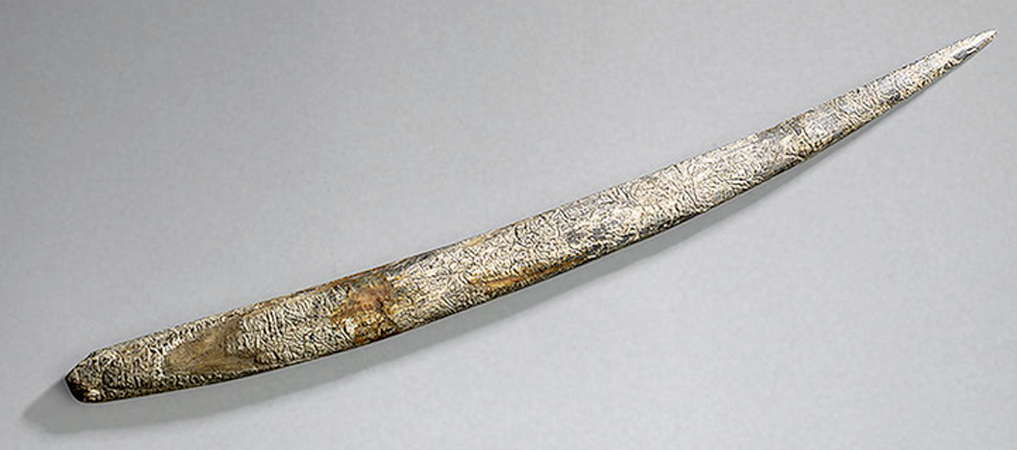
The bone with the engraving is a long bone, possibly from a mastodon or mammoth.
Photo: Chip Clark / Smithsonian
Researchers from the Smithsonian Institution and the University of
Florida have announced the discovery of a bone fragment, approximately
13 000 years old, in Florida with an incised image of a mammoth or
mastodon. This engraving is the oldest known example of Ice Age art to
depict a proboscidean (the order of animals with trunks) in the
Americas. The team's research is published online in the Journal of
Archaeological Science.
Photo: Chip Clark / Smithsonian
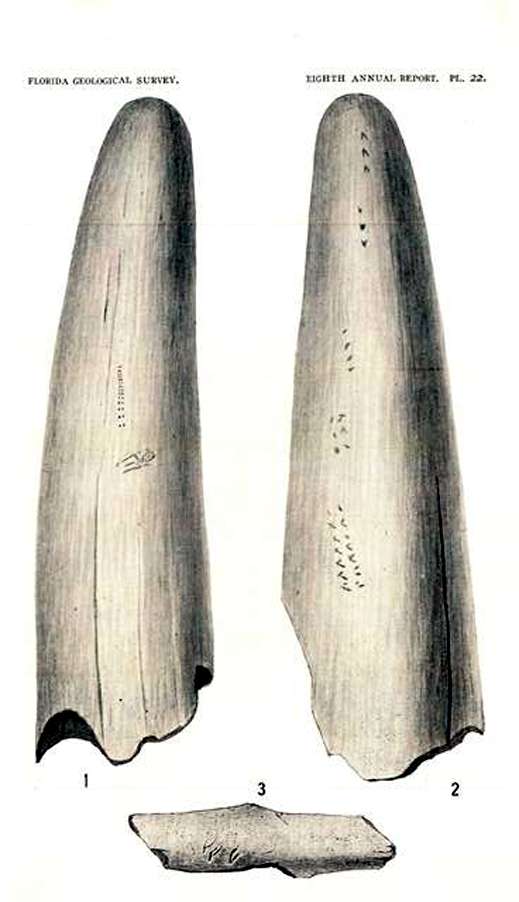
Two different views of one tusk (1-2) and bird bone (3) with man made engravings
Uncovered near the Old Vero Man Site by Dr Sellards.
Source: Florida Geological Survey 1916, Eighth Annual Report by Dr Sellards - Plate 22
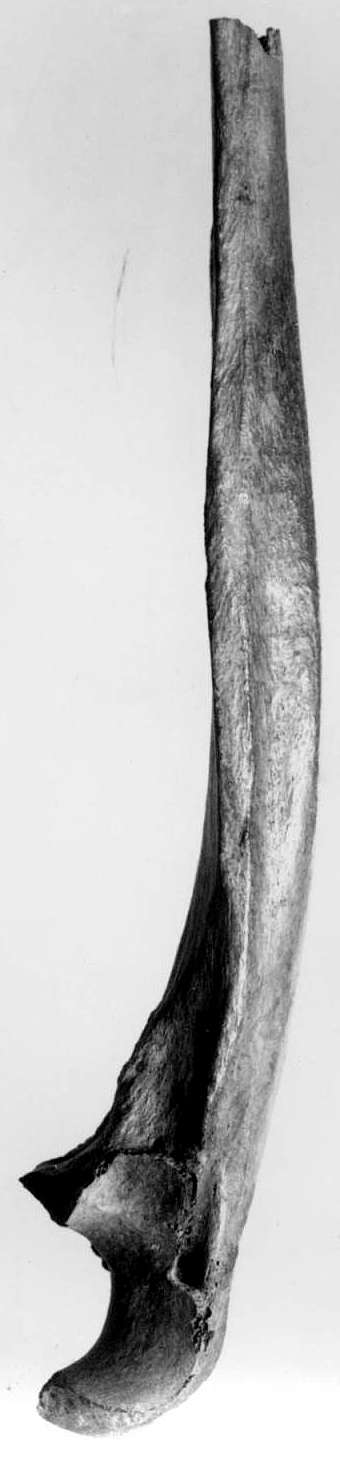
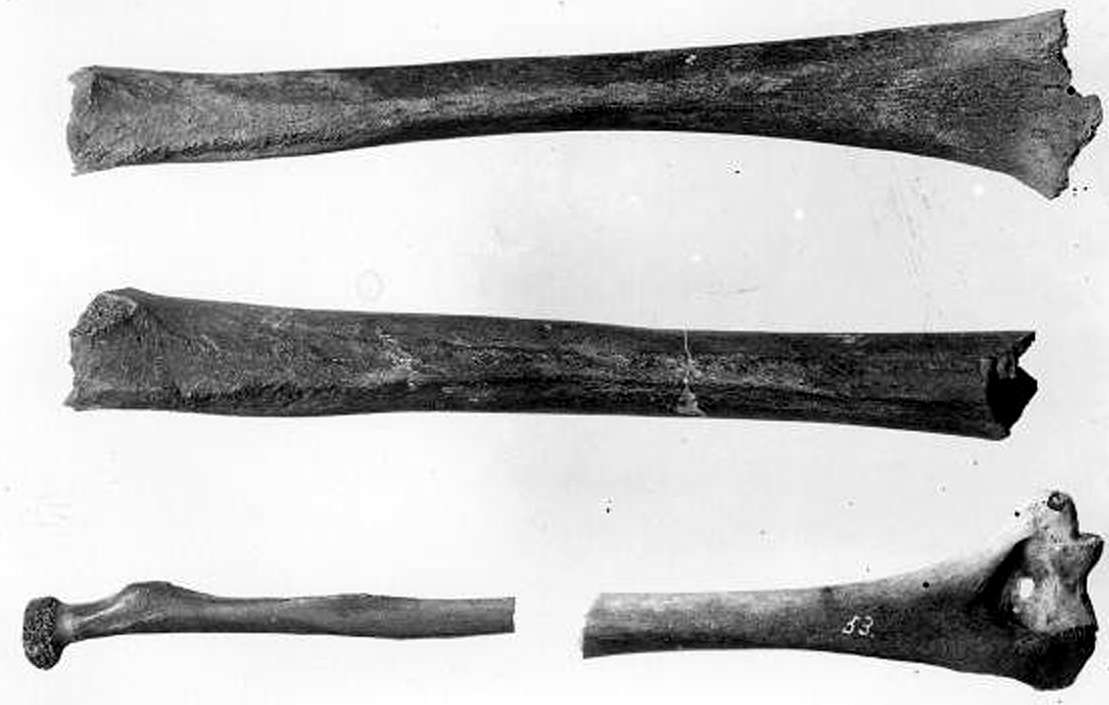
Human ulna from Vero, found in stratum 3.
Photographed in February of 1916.
Source: Florida Memory - State Library and Archives of Florida
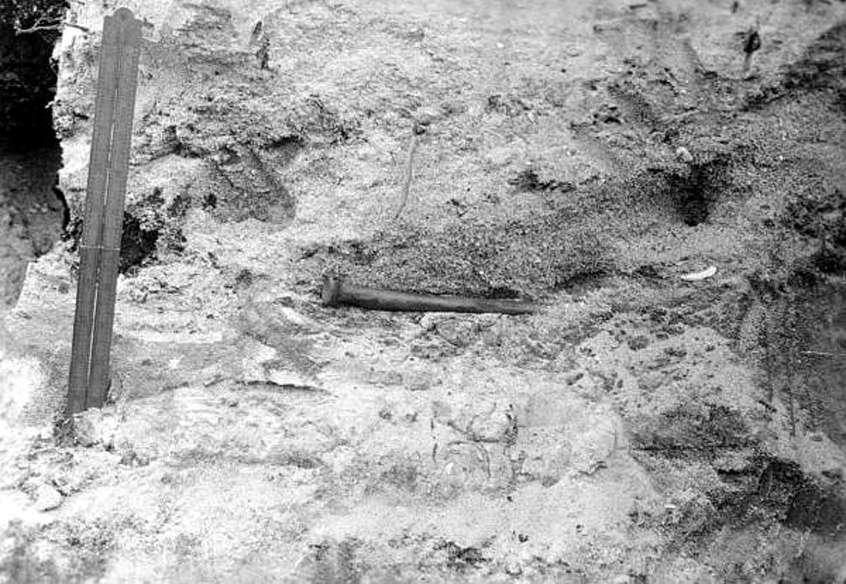
Human radius in position in the canal bank, Vero, Florida
Source: Florida Memory - State Library and Archives of Florida
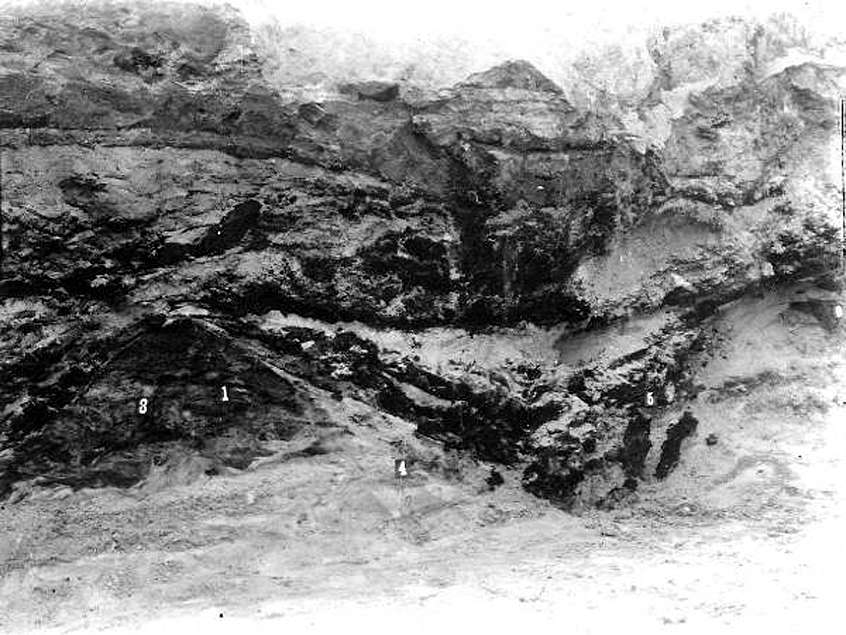
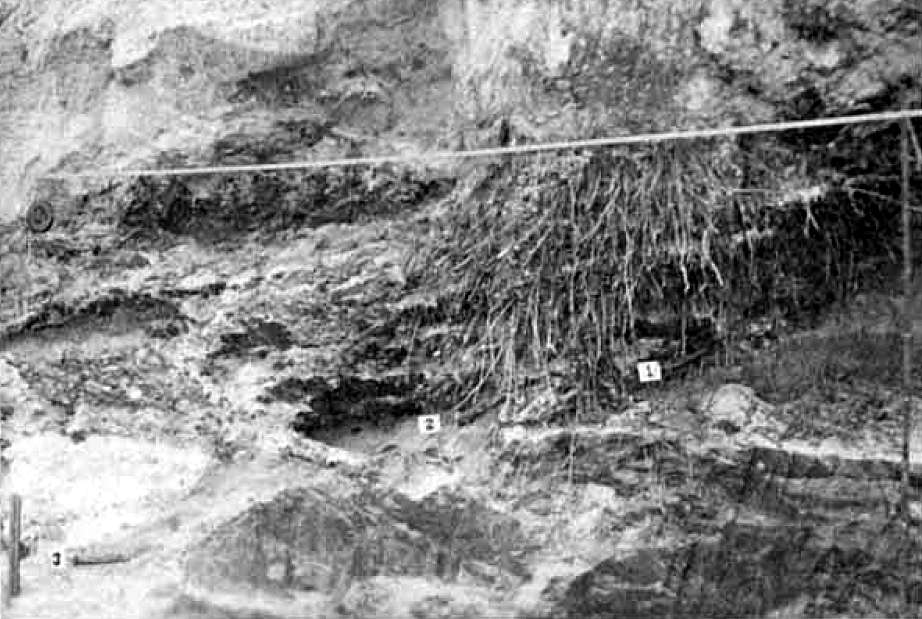
Close-up of stratum no. 2 at Vero where human remains were found in the canal bank, Vero, Florida
Photographer Sellards, Elias Howard
Source: Florida Memory - State Library and Archives of Florida
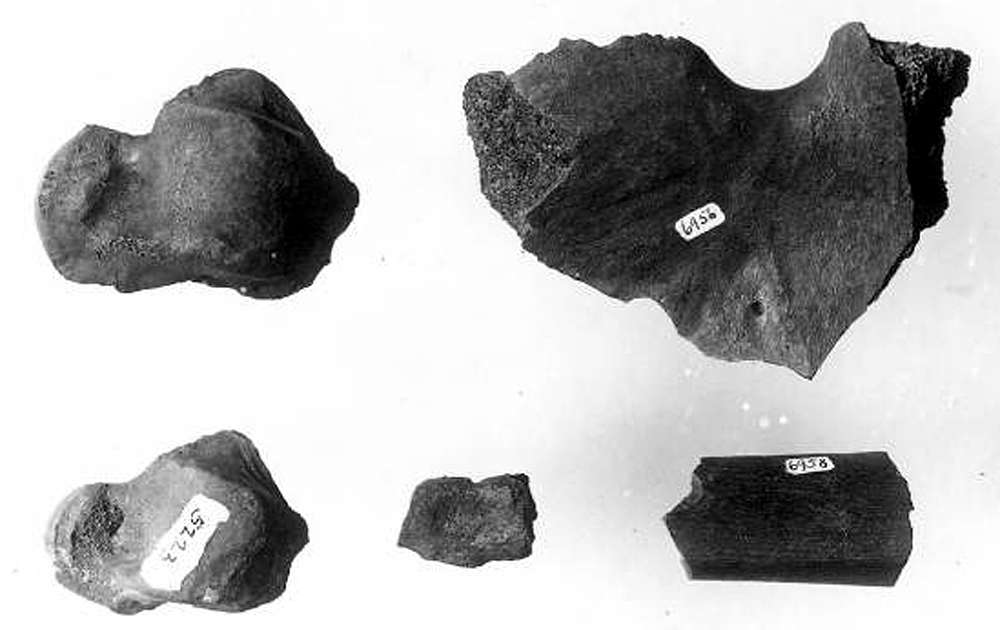
Vero human remains
Source: Florida Memory - State Library and Archives of Florida
Vero human remains
Source: Florida Memory - State Library and Archives of Florida
Photograph showing the ulna, femur and radius in place in the bank.
M. Rasmussen et al. “The genome of a Late
Pleistocene human from a Clovis burial site in western Montana,” Nature,doi:10.1038/nature13025, 2014.
Clovis, with its distinctive biface, blade and osseous technologies, is the
oldest widespread archaeological complex defined in North America, dating from
11,100 to 10,700 14C years before present (BP) (13,000 to 12,600 calendar
years BP)1, 2. Nearly 50 years of archaeological research point to the Clovis
complex as having developed south of the North American ice sheets from an
ancestral technology3. However, both the origins and the genetic legacy of the
people who manufactured Clovis tools remain under debate. It is generally
believed that these people ultimately derived from Asia and were directly
related to contemporary Native Americans2. An alternative, Solutrean,
hypothesis posits that the Clovis predecessors emigrated from southwestern
Europe during the Last Glacial Maximum4. Here we report the genome sequence of
a male infant (Anzick-1) recovered from the Anzick burial site in western
Montana. The human bones date to 10,705 ± 35 14C years BP (approximately
12,707–12,556 calendar years BP) andwere directly associated with Clovis
tools*We sequenced the
genome to an average depth of 14.4× and show that the gene flow from the
Siberian Upper Palaeolithic Mal’ta population5 into Native American ancestors
is also shared by the Anzick-1 individual and thus happened before 12,600
years BP. We also show that the Anzick-1 individual is more closely related to
all indigenous American populations than to any other group.Our data
are compatible with the hypothesis that Anzick-1 belonged to a population
directly ancestral to many contemporary Native Americans. Finally, we find
evidence of a deep divergence in Native American populations that predates the
Anzick-1 individual
M. Rasmussen et al. (2014)- Supplementary Information
"...The date on Anzick-1 cranial bone (10,705±35) differs from the average date for the rods (11,035±45). Their respective calibrated age ranges are 12,722 to 12,590 calendar years BP (Anzick-1) and 13,039 to 12,763 calendar years BP (antler rods) ⎯ values that do not overlap at the 95.4% confidence interval..."
"...Mitochondrial DNA (mtDNA) sequencing showed substitutions that characterize the mtDNA of Anzick-1 individual as a member of sub-haplogroup D4h3a17..."
"...The D4h3a branch [with an age estimate of 13,000 +/- 2600 years57] encompasses all Native American D4h3 mtDNAs (including mtDNA of Anzick-1) and has been mostly found in South America (Chile, Peru, Ecuador, Bolivia, Brazil), and to a much lesser extent also from Mexico and California (see the spatial distribution of D4h3a in Fig. 3 in53). The highest frequency of D4h3a has been found from Cayapa Amerinds from Ecuador (22%)..."
"... The Anzick-1 individual shares most ancestry with Native Americans with small patches shared with Asians and less with Europeans..."
"... The same analyses were performed on the modern Native American genomes generated for this study. While the two Karitiana genomes showed very high Native American ancestry, the Mayan individual showed a proportion of European ancestry of 12% ..."
"...Anzick-1 individual is clearly most closely related to modern-day Native American populations. However, this affinity is weaker in 7 of the 52 Native American populations in the data: Aleutians, East Greenlanders, West Greenlanders, Chipewyan, Algonquin, Cree, and Ojibwa (Figure 2a). In Eurasia, genetic affinity with the Anzick-1 individual decreases with distance from the Bering Strait (Figure 2a)..."
"...ancestry of the three Northern Amerind-speaking populations Algonquin, Cree, and Ojibwa to be entirely from the same migration that gave rise to Central and Southern American populations..."
"...We found that Central and South American populations all share a closer genetic history with the Anzick-1 individual than they do with modern-day North American individuals (Native American groups are skewed towards Anzick-1 from the 1:1 baseline). This supports the results above of a shared genetic history between the Anzick-1 individual and Central and Southern American groups that is not shared with the more Northerly groups in the data set..."
"...There is no evidence for Siberian gene flow into the Northern Amerinds consistent with the findings of Reich et al.72 using the same Native American data and a very similar approach..." Thus, the data support a simple tree-like model where modern-day Southern and Central Native Americans are more closely related to the Anzick-1 individual than they are to modern-day Northern Native Americans.
"...Haplogroup X is an exception to this pattern of limited geographical distribution. It is found, generally at
low frequencies, in both West Eurasians (Richards et al. 2000) and some northern groups of Native Americans but, intriguingly, it is absent in modern north Siberian and East Asian populations..."
"...The transition at np 200 was seen in virtually all previously analyzed Native American haplogroup X mtDNAs, whereas the transition at np 16213 was absent in some of the Ojibwa described by
Brown et al. (1998). We surveyed our Old World haplogroup X mtDNAs for the five diagnostic X2a mutations (table 2) and found a match only for the transition at np 12397 in a single X2* sequence from Iran. In a parsimony tree, this Iranian mtDNA would share a common ancestor with the Native American clade..."
"... two complete Native American X sequences (from one Navajo and one Ojibwa)..."
Waters, M. and Stafford, T. 2007 Redefining the age of Clovis: implications for the peopling of the Americas. Science 315:1122–6
"... Anzick, Montana: The Anzick site in Montana is
reported to be a Clovis burial and cache. At
Anzick, 12 radiocarbon dates were obtained from the cranial elements of a
purported Clovis
infant skeleton and 2 dates on associated bone foreshafts. Collagen extracted
from the foreshafts yielded an average age of 11,040 + 35 14C yr B.P. (S7). The human skeletal remains were dated during three separate research programs. The first batch of seven dates
on bone
comprise five chemical fractions that were considered reliable and averaged to 10,680 + 50
14C yr B.P. (S2). Later, a single purified collagen sample yielded a date of
11,550 + 60 14C yr
B.P. (CAMS-35912). This measurement is rejected because subsequent
dating of the same XAD
fraction and preceding fractions from newly sampled bone did not
replicate the 11,550 14C yr
B.P. result. The source of the contaminating 14C-depleted carbon
is unknown. A more recent
series of dates from a single cranial fragment provided four new
radiocarbon ages. These
fractions confirm previous date estimates for the skeleton of 10,705 + 35 14C yr B.P. The 14C
dates on the skeletonversus the dates on the bone foreshafts suggest that the skeletal remains and
Clovis artifacts may not be related and that the foreshaft ages more accurately date the site. The 10,700 year old human
remains could post-date the Clovis cache, but additional research is needed to resolve this
issue. A more recent, late Paleoindian or early Archaic human skeleton was also
found at
the site (S7). The association of any of the human remains with the Clovis cache is problematic because the site had been excavated accidentally with heavy machinery before
the human bones and artifacts were recognized and later recovered at some distance from the
actual site. Thus, the directly dated Clovis artifacts—the foreshafts—appear to accurately date the
site..."
Raghavan M. et al. Upper Palaeolithic Siberian genome reveals dual ancestry of Native Americans. Nature
The origins of the First Americans remain contentious. Although Native
Americans seem to be genetically most closely related to east Asians1, 2, 3, there is no consensus with regard to which specific Old World populations they are closest to4, 5, 6, 7, 8. Here we sequence the draft genome of an approximately 24,000-year-old individual (MA-1), from Mal’ta in south-central Siberia9,
to an average depth of 1×. To our knowledge this is the oldest
anatomically modern human genome reported to date. The MA-1
mitochondrial genome belongs to haplogroup U, which has also been found
at high frequency among Upper Palaeolithic and Mesolithic European
hunter-gatherers10, 11, 12, and the Y chromosome of MA-1 is basal to modern-day western Eurasians and near the root of most Native American lineages5.
Similarly, we findautosomal evidence that MA-1 is basal to modern-day
western Eurasians and genetically closely related to modern-day Native
Americans, with no close affinity to east Asians. This suggests that
populations related to contemporary western Eurasians had a more
north-easterly distribution 24,000 years ago than commonly thought.
Furthermore, we estimate that 14 to 38% of Native American ancestry may
originate through gene flow from this ancient population. This is likely
to have occurred after the divergence of Native American ancestors from
east Asian ancestors, but before the diversification of Native American
populations in the New World. Gene flow from the MA-1 lineage into
Native American ancestors could explain why several crania from the
First Americans have been reported as bearing morphological
characteristics that do not resemble those of east Asians2, 13. Sequencing of another south-central Siberian, Afontova Gora-2 dating to approximately 17,000 years ago14,
revealed similar autosomal genetic signatures as MA-1, suggesting that
the region was continuously occupied by humans throughout the Last
Glacial Maximum. Our findings reveal that western Eurasian genetic
signatures in modern-day Native Americans derive not only from
post-Columbian admixture, as commonly thought, but also from a mixed
ancestry of the First Americans.
Raghavan M. et al. Upper Palaeolithic Siberian genome reveals dual ancestry of Native Americans. Nature
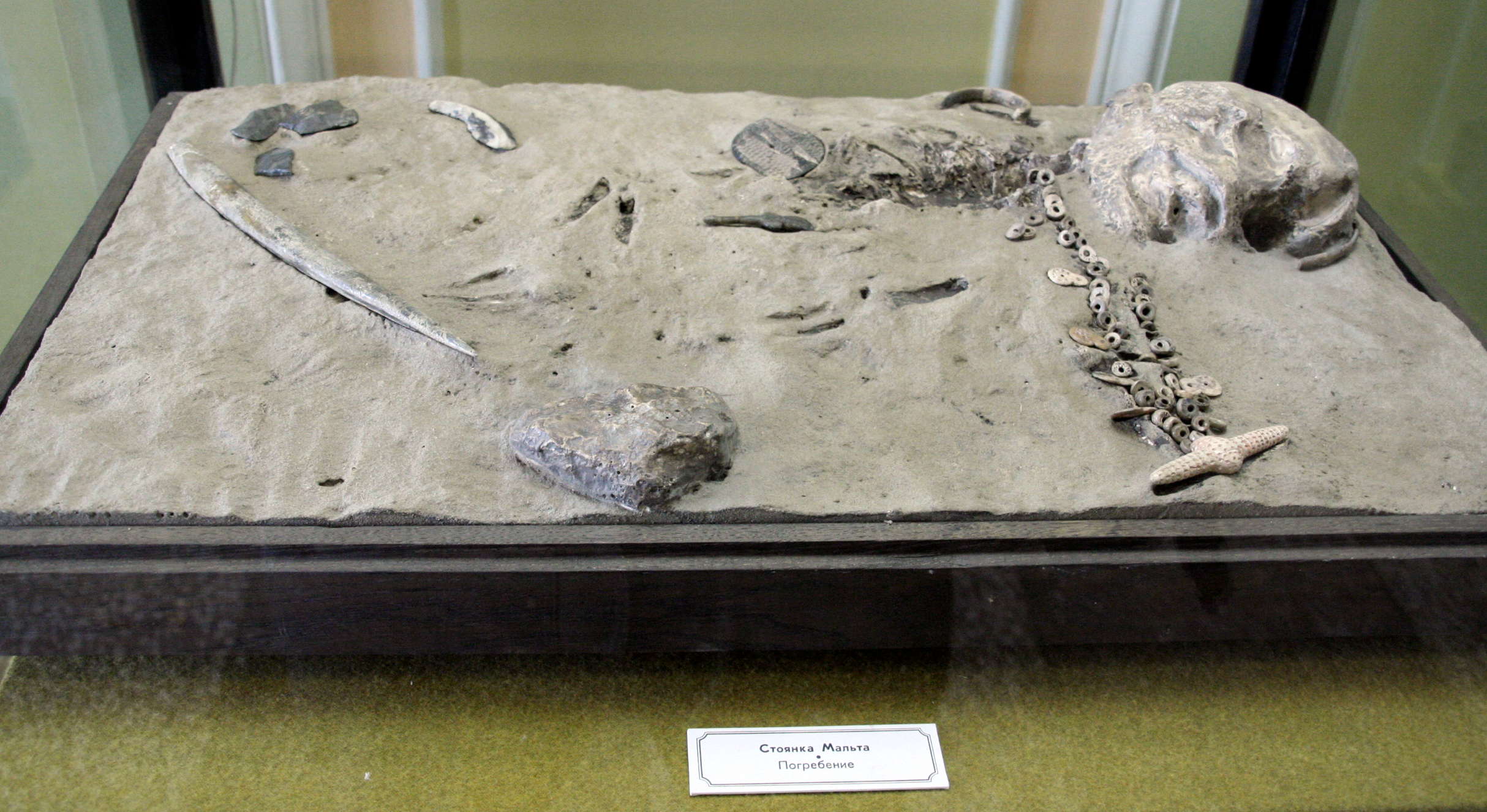
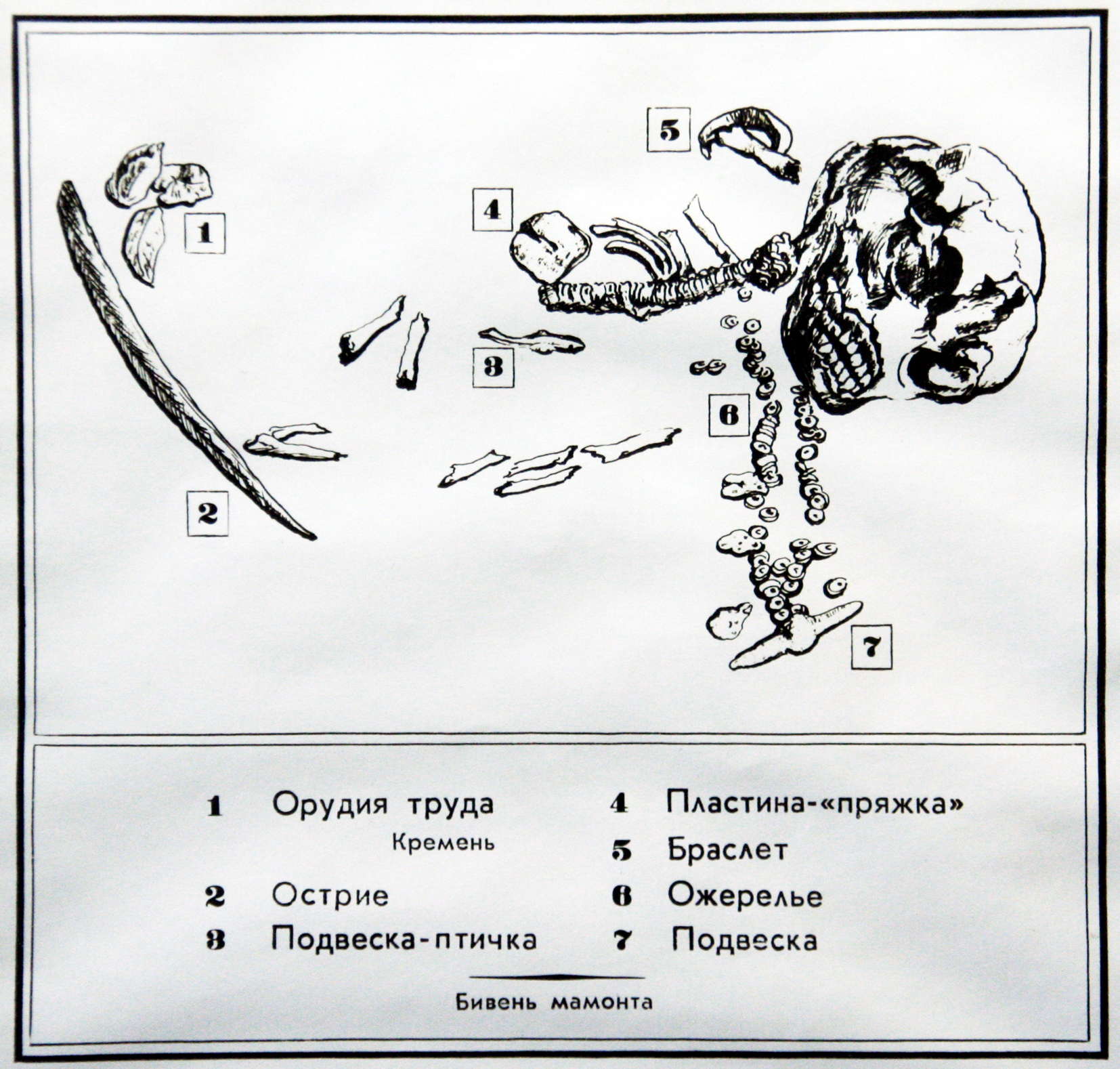
The Mal'ta boy was buried with a variety of artefacts, including a Venus figurine
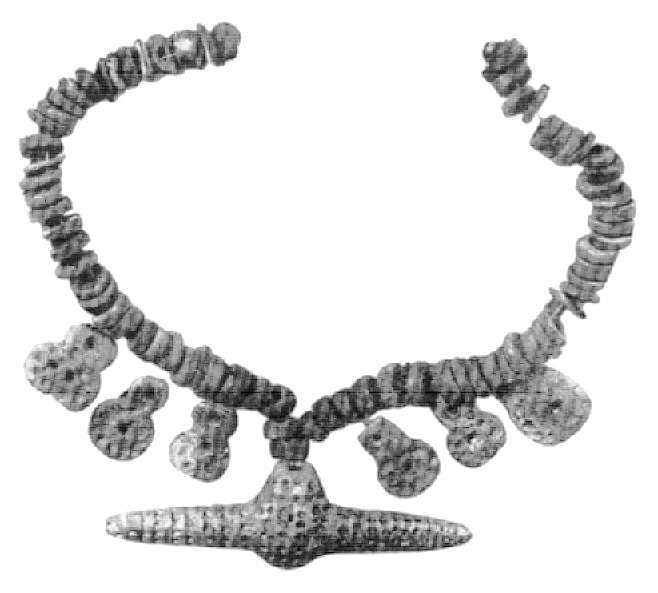
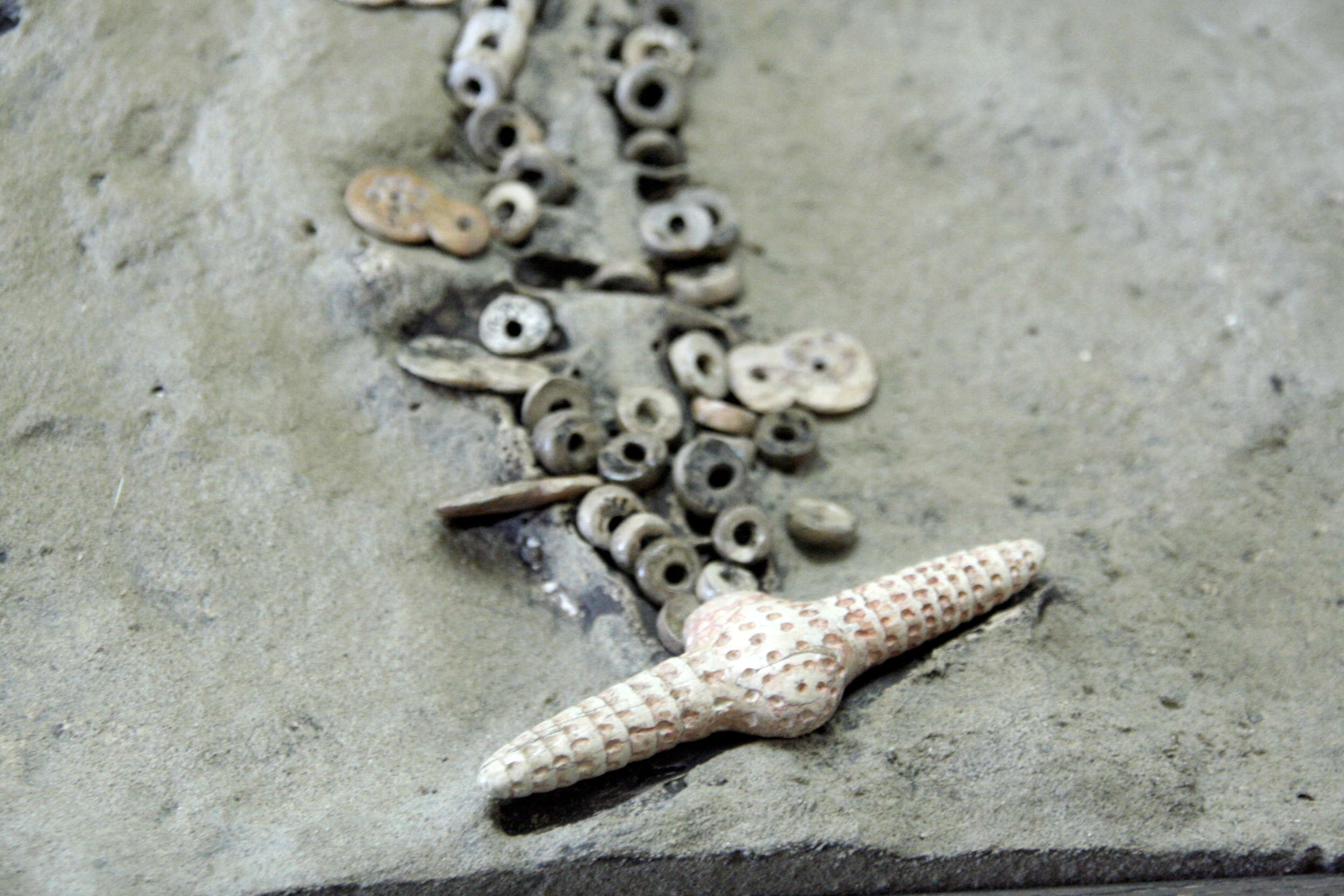
A good example of such finds is this complete necklace, found as a grave
good of the child burial. The child was sprinkled with red ochre and
charcoal. The necklace consists of one central and six secondary
pendants and 120 flat beads. The surface of the pendants is entirely
covered with pit-ornamentation.
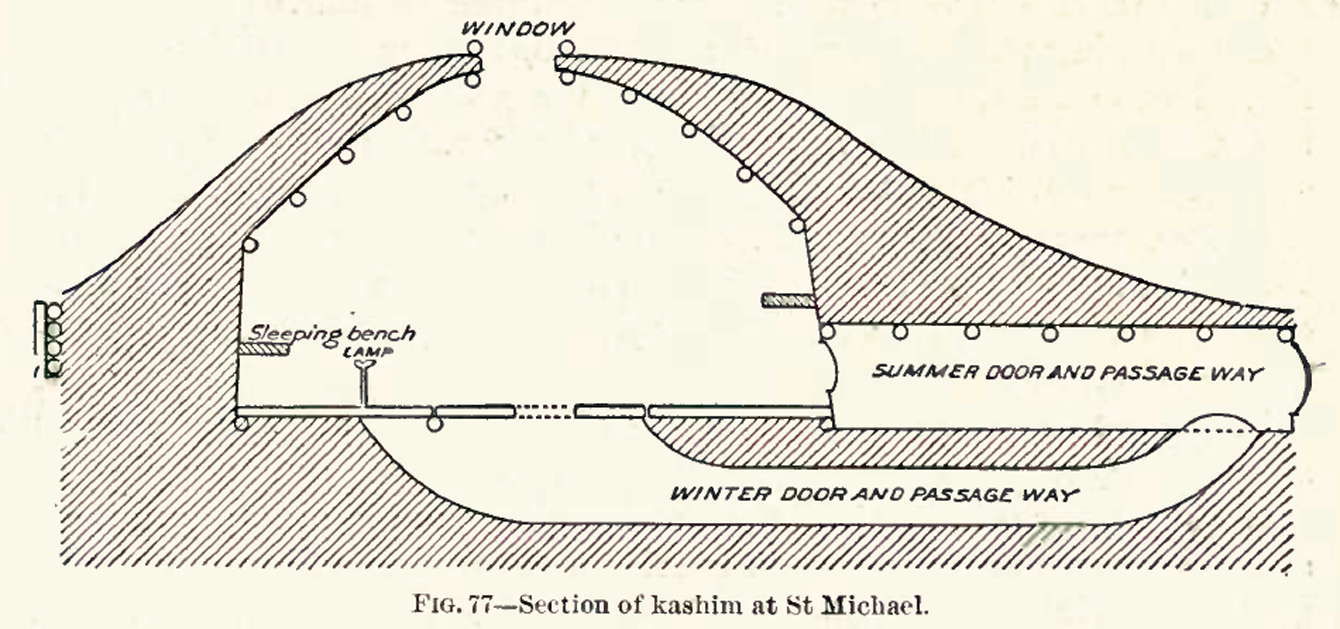
Section of a house in Siberia, possibly similar to those at Buret',
showing the corridor to the outside, and the fact that there were two
modes of use, one for summer, and the other for winter, which cut down
on the loss of heat from the building.
Photo: Nelson (1881)
References
Abramova Z., 1995: L'Art paléolithique d'Europe orientale et de Sibérie., Grenoble: Jérôme Millon.
Bednarik R., 2010: An overview of Asian palaeoart of the Pleistocene, IFRAO Congress, September 2010 – Symposium: Pleistocene art of Asia (Pre-Acts)