Translate

Saturday, January 4, 2014

High-Throughput Sequencing of a South American Amerindian.

Abstract

The emergence of next-generation sequencing technologies allowed access to the vast amounts of information that are contained in the human genome. This information has contributed to the understanding of individual and population based variability and improved the understanding of the evolutionary history of different human groups. However, the genome of a representative of the Amerindian populations had not been previously sequenced. Thus, the genome of an individual from a South American tribe was completely sequenced to further the understanding of the genetic variability of Amerindians. A total of 36.8 giga base pairs (Gbp) were sequenced and aligned with the human genome. These Gbp corresponded to 95.92% of the human genome with an estimated miscall rate of 0.0035 per sequenced bp. The data obtained from the alignment were used for SNP (single-nucleotide) and INDEL (insertion-deletion) calling, which resulted in
the identification of 502,017 polymorphisms, of which 32,275 were potentially new high-confidence SNPs and 33,795 new INDELs, specific of South Native American populations. The authenticity of the sample as a member of the South Native American populations was confirmed through the analysis of the uniparental (maternal and paternal) lineages. The autosomal comparison distinguished the investigated sample from others continental populations and revealed a close relation to the Eastern Asian populations and Aboriginal Australian. Although, the findings did not discard the classical model of America settlement; it brought new insides to the understanding of the human population history. The present study indicates a remarkable genetic variability in human populations that must still be identified and contributes to the understanding of the genetic variability of South Native American populations and of the human populations history.

Ribeiro-dos-Santos AM, de Souza JES, Almeida R, Alencar DO, Barbosa MS, et al. (2013) High-Throughput Sequencing of a South American Amerindian. PLoS ONE 8(12): e83340. doi:10.1371/journal.pone.0083340

http://www.plosone.org/article/info%3Adoi%2F10.1371%2Fjournal.pone.0083340


Charlie Hatchett 

Pre-Clovis Artifacts from Central Texas 
http://www.pre-clovis.com
http://www.forum.pre-clovis.com
http://www.blog.pre-clovis.com

Saturday, December 21, 2013

Steroidal biomarker analysis of a 14,000 years old putative human coprolite from Paisley Cave, Oregon

Steroidal biomarker analysis of a 14,000 years old putative human coprolite from Paisley Cave, Oregon 

Lipid components of a putative human coprolite sample from the Paleoindian site of Paisley Cave, Oregon (12,300 14C yr BP) were analyzed using GC/MS to explore its origin in light of controversial data obtained from mitochondrial DNA, cross-immunoelectrophoresis, trisodium phosphate rehydration, and micromorphology analyses. Results show the predominant presence of 5b-stigmastanol, the biomarker of herbivore fecal matter, supporting micromorphological identification of the coprolite as herbivore. This study highlights the potential of the biomarker approach in coprolite studies devoted to research on the first presence of humans in North America. 

https://www.academia.edu/

Charlie Hatchett 

Pre-Clovis Artifacts from Central Texas 
http://www.pre-clovis.com
http://www.forum.pre-clovis.com
http://www.blog.pre-clovis.com


Rick Baudé Wrote:
-------------------------------------------------------
> I'm a little confused here Charlie, since you're
> one of the few people on the board that know
> something about ' pre-clovis are they saying that
> the results are inconclusive about whether it's a
> hominid or that it leans toward a hominid origin?

This statement in the paper sums up the authors' view concerning one of the coprolites:

"...the predominant presence of 5b-stigmastanol, the biomarker of
herbivore fecal matter, supporting micromorphological identification
of the coprolite as herbivore..."

As I noted above:

“…The sample in question is 1374-5/5D-31-2. mtDNA Hg B2 was determined by Copenhagen SNaPshot, Copenhagen cloned, Uppsala Pyrosequenced, Uppsala cloned and sequenced. The sample was dated to 12,400 ± 60 by Beta Analytic Inc. and 12,275 ± 55 by Oxford University. Note that general mammalian primer pair that targets a small fragment of the 16S ribosomal RNA was negative for 1374-5/5D-31-2…”

Precluding positive DNA evidence for an herbivore (or any other mammal besides human) source for coprolite sample 1374-5/5D-31-2.

There are 26 coprolites from Paisley Caves identified as human, 7 are AMS dated older than Clovis (> 11,050 14C yr BP per Waters and Stafford 2007).

This statement in the paper sums up the authors' view concerning older than Clovis occupation of the Americas:

“…Although some claims have been made for pre-Clovis sites in North (e.g., Adovasio et al., 1999; Gilbert et al., 2008; Falk, 2004; Jenkins et al., 2012) and South America (Dillehay, 2000; Guidon, 1989; Waters and Stafford, 2007), the putative earliest sites that are typically mentioned are still controversial (Fiedel, 2000; Kelly, 2003). The first clear evidence of occupation appears much later and is related to the Clovis complex _11.000 to 10.800 14C yr BP (Waters and Stafford, 2007)…”


> BTW what are your thoughts on "Monte Verde" and
> the "Kelp Highway" frankly I see no impediments at
> all to either one.  Looking at Google earth and
> Monte Verde's present position I can see no major
> geographical barriers to entering the new world
> after all we're talking about bands of people that
> maybe numbered 25 to 50 people or so and there had
> to dozens to hundreds of different way to make it
> into the new world.   

The vast majority of archeologists agree with Goebel et al., 2008:

“…Perhaps the best candidate is the Monte Verde site (Chile), which
contains clear artifacts in a sealed context and is dated to 14.6 ka (58).
Despite criticism (59), its acceptance by most archaeologists means synchronous
and possibly earlier sites should exist in North America…”

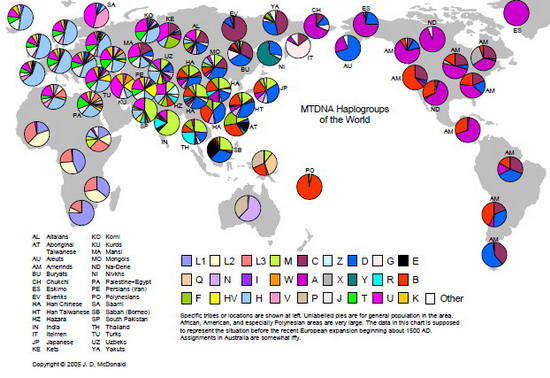
mtDNA evidence is concordant with a Pacific coast migration (See Hg B ):


Note the lack of mtDNA B in northern North America and Siberia.

LGM sea levels:


Distribution of stemmed projectiles in the Americas, during and before Clovis times, extends from Oregon to the tip of Chile, near the Straits of Magellan:


In Siberia, the northern most dated stemmed points are found at The Ushki Site on the Kamchatka Peninsula:


“…Here we present four new radiocarbon dates (and two previously unpublished dates) on curated charcoal from hearth features excavated at Ushki-1 more than 20 years ago. They indicate that these hearths and associated dwelling features date to about 13,000 cal BP. We now know 15 radiocarbon dates on charcoal from a variety of features and profiles across Ushki-1 and Ushki-5 that indicate the age of layer 7 is about 13,000 cal BP…”


13,000 cal BP falls within the Clovis timeframe, suggesting a possible technological backflow from North America to Siberia. 

Charlie Hatchett 

Pre-Clovis Artifacts from Central Texas 
http://www.pre-clovis.com
http://www.forum.pre-clovis.com
http://www.blog.pre-clovis.com

Saturday, December 14, 2013

The Calico Archaeological Site, California

Uranium-series and soil-geomorphic dating of the Calico archaeological site, California

    James L. Bischoff, Roy J. Shlemon, T. L. Ku, Ruth D. Simpson, Robert J. Rosenbauer and  Fred E. Budinger, Jr.

    Author Affiliations

    1 U.S. Geological Survey, Menlo Park, California 94025
    2 Roy J. Shlemon and Associates, Inc., P.O. Box 3066, Newport Beach, California 92663
    3 Department of Geological Sciences, University of Southern California, Los Angeles, California 90007
    4 San Bernardino County Museum, 2024 Orange Tree Lane, Redlands, California 92373
    5 U.S. Geological Survey, Menlo Park, California 94025
    6 Calico Early Man Site, P.O. Box 535, Yermo, California 92398

Abstract

Lithic specimens identified as artifacts have been recovered from near the base of the Yermo fan deposits at Calico, California. The soil on the fan surface is a strongly developed relict paleosol. Comparison of this soil with dated paleosols elsewhere in the southwestern United States suggests that the surface is about 80,000 to 125,000 yr old. Clasts near the base of the deposit are well cemented by laminated CaCO3 that probably formed from groundwater action while the fan was still active. Uranium-thorium assays on the CaCO3 indicate an age of 200,000 yr.


Image

This small, finely-worked, symmetrical, black chert graver has been created by the sequential removal of dozens of flakes in a patterned manner. The ventral side is a smooth flake bulb. Found in cemented reddish-tan sands at a depth of nearly 4 m in the Lower Yermo Formation. There is no possibility that this object could be a geofact produced by natural geologic processes. Coated with powdered aluminum. D. Griffin photo

Image


Dorsal (left) and ventral (right) sides of a small beaked graver recovered from a depth of 3.99 m (157 in) in Master Pit I. Powdered aluminum coating to reveal morphological details. Dorsal side clearly fashioned according to a predetermined design, being nearly symmetrical. The ventral side is the unmodified positive bulb of the small flake. The working tip is shown in greater detail in a subsequent image. D. Griffin photos


Image

Multi-function Scraper or Blade

Chalcedony blade with a narrow ventral bulb scar (at right) and a high dorsal arete (at left), bifacially retouched along margins, and unifacially flaked at the distal end, with use-wear evident. Appears to have been used as both a cutting tool and an end scraper. Recovered from Trench 1 at a depth of 1.88 m (74 inches). D. Griffin photos


Image

Blade tool or side scraper

Same as the dorsal view in the preceding figure, but a clearer portrayal of the sharp, evenly-spaced removal scars on the blade laterals. Lateral retouch is bifacial. D. Griffin photo.

 Image

Crescentic Chopper

Crescent-shaped chopper or skreblo, showing bifacial flaking and a blunted back edge; a definitive tool type in Asia. Coated with powdered aluminum. From Calico Master Pit II. D. Griffin photo.


Image

Crescentic Scraper

The reverse side of the skreblo-like convex scraper, showing flaking to create a crescentic working edge (top). D. Griffin photo)


http://www-personal.umich.edu/~feliks/louis-leakey-calico-prt2/images/Fig3_pcn21-jan-feb2013-p5-pdf-export-for-html.jpg

Image
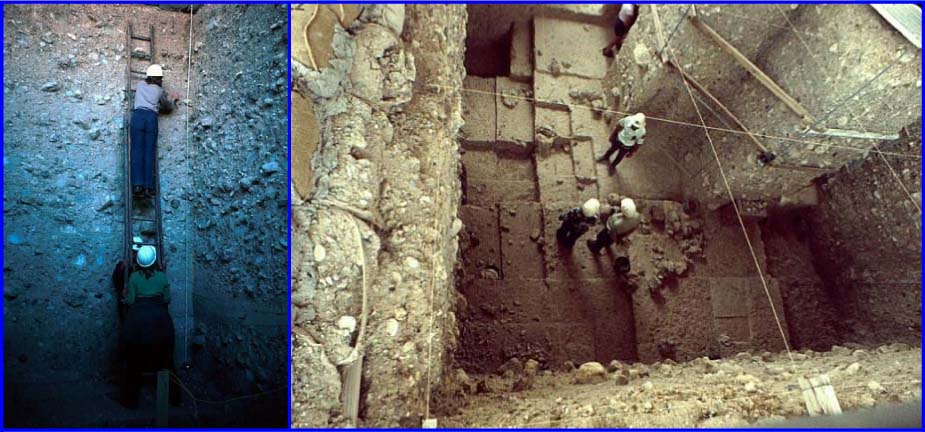
Budinger measuring objects exposed in the wall of Master Pit I.
T. Oberlander photo.


Charlie Hatchett

www.pre-clovis.com
www.forum.pre-clovis.com

www.blog.pre-clovis.com